Green Grove Soil Factory logo
Green Grove Soil Factory
"Together, let’s make it greener"
AR

Water Pooling Around Roots: How Volcanic Stone Can Improve Soil Drainage

A field-focused guide to diagnosing water pooling around roots and using agricultural volcanic stone as part of a balanced soil-drainage and irrigation strategy.

Water Pooling Around Roots: How Volcanic Stone Can Improve Soil Drainage
Table of Contents

Plants need water, but when soil remains saturated for long periods, air-filled pore space around the roots decreases and root respiration can be restricted. The problem is especially noticeable in heavy soils and sites with slow drainage, where growers may see weak growth, yellowing, or a limited root system despite regular irrigation.

When Irrigation Water Becomes a Root-Zone Problem

Poor drainage can result from soil-particle compaction, excessive irrigation, low porosity, or a growing mix that does not allow water and air to move in a balanced way. Prolonged saturation makes the root environment progressively less favorable.

Why Does Poor Drainage Occur?

Fine-textured soil can retain water effectively, but if the structure is dense or compacted, large pores become limited. In other cases the physical soil may be acceptable while irrigation volume, frequency, or site drainage creates saturation. The first task is therefore to separate an irrigation-management problem from a soil-structure problem.

Role of Volcanic Stone in the Root Zone

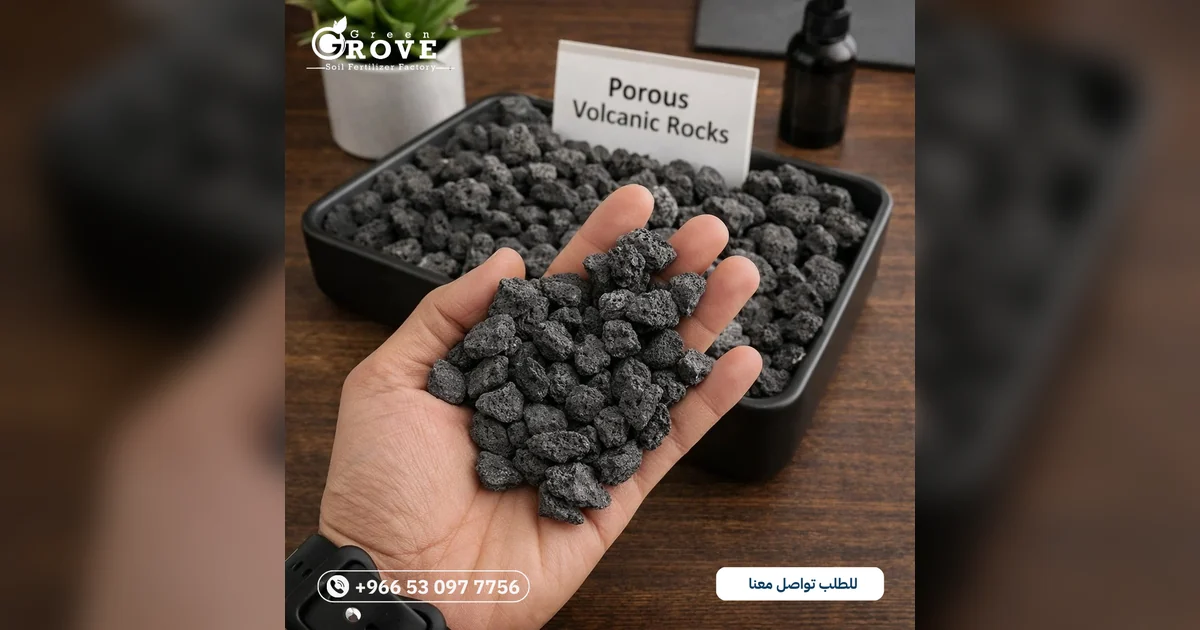
Agricultural volcanic stone has a granular, porous structure. When it is appropriately incorporated into soil or growing-media blends, it can add relatively stable spaces between finer particles. Those spaces can provide paths for excess water while helping air return to the root zone after irrigation. Its role is physical; it is not a replacement for fertilizer, irrigation management, or engineering drainage.

Green Grove Soil Agricultural Volcanic Stone

Green Grove Soil supplies agricultural volcanic stone for soil improvement, growing-media blends, and projects that require more aeration and drainage. Application method and quantity depend on soil type, crop, root depth, and irrigation system, so particle size and blending rate should be selected for the project rather than applied as a universal formula.

The Result Growers Are Looking For

The objective is not to remove water as fast as possible. A productive root zone needs both moisture and air. The target is a medium that accepts irrigation, retains a usable amount of moisture, drains the excess, and allows oxygen to return to the pores around roots.

Overwatering vs. Poor Drainage

Two situations can look similar. In the first, the plant simply receives more water than it needs and the irrigation program should be changed. In the second, the soil itself cannot release excess water at an appropriate rate. Reducing irrigation may help but does not fully correct a dense structure. Compare how long moisture remains after irrigation, inspect more than one point in the field, and check the actual rooting depth rather than relying on surface dryness.

How Heavy Soil Affects the Root Zone

Soils with a high proportion of fine particles tend to hold water longer and can become compacted through repeated irrigation and drying. This does not make heavy soil inherently bad; it can retain useful moisture and nutrients. The management challenge is to maintain a structure where water retention does not turn into continuous saturation.

Field Signs Worth Investigating

  • Puddles or wet patches remain after irrigation.
  • Water enters the soil slowly.
  • The surface looks sealed or glossy.
  • Excavated soil is sticky and dense for an extended period.
  • Roots remain shallow rather than spreading deeper.
  • Plants yellow or grow slowly despite a regular fertilizer program.

These signs are not proof of one cause, but they justify checking soil structure and irrigation.

Why Do Roots Need Air?

Roots are living organs that require oxygen for respiration and energy production. When pores remain filled with water, gas exchange slows. Improving drainage is therefore not simply about getting rid of water; it is about restoring air-filled pore space after irrigation.

How Does Volcanic Stone Modify Soil Structure?

Irregular, granular volcanic particles can sit between fine soil particles and help create spaces that resist rapid closure after irrigation. Those spaces support movement of both water and air. The mineral material is relatively stable, which is why its main value in this application is structural rather than nutritional.

Particle Size Matters More Than Simply Adding More Material

Coarser particles create larger structural spaces and generally support faster air and water movement, while finer particles integrate more uniformly with fine-textured soil and growing mixes. The correct choice depends on soil texture, crop, rooting depth, and growing system. Excess material or the wrong size can make water behavior unsuitable, so a limited trial before full-scale use is valuable.
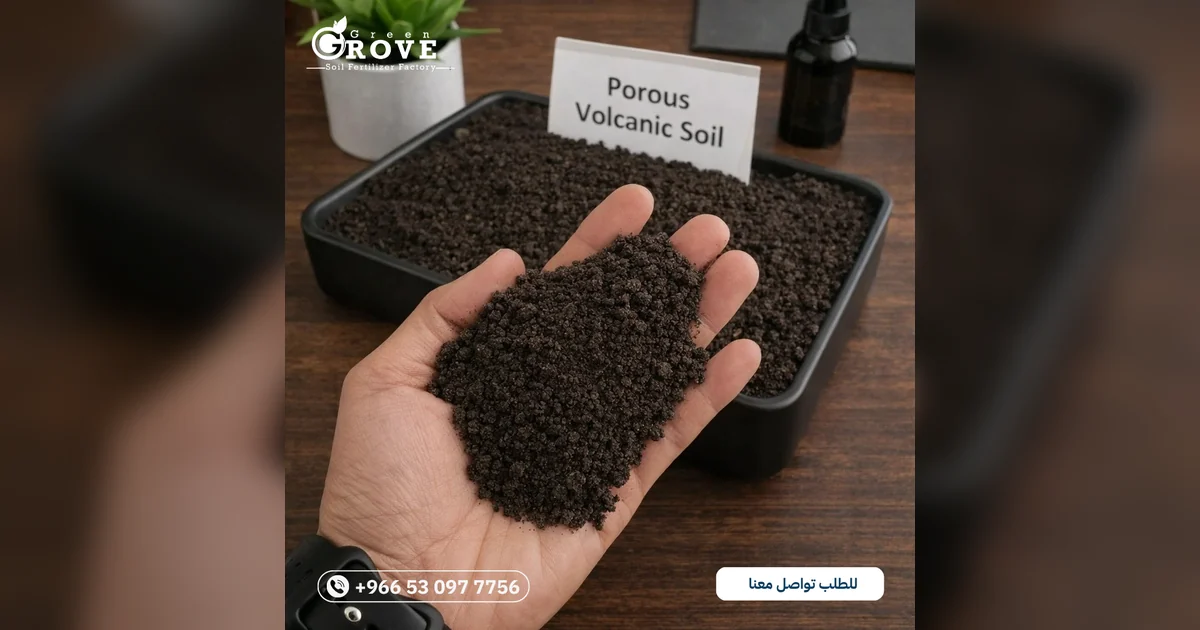
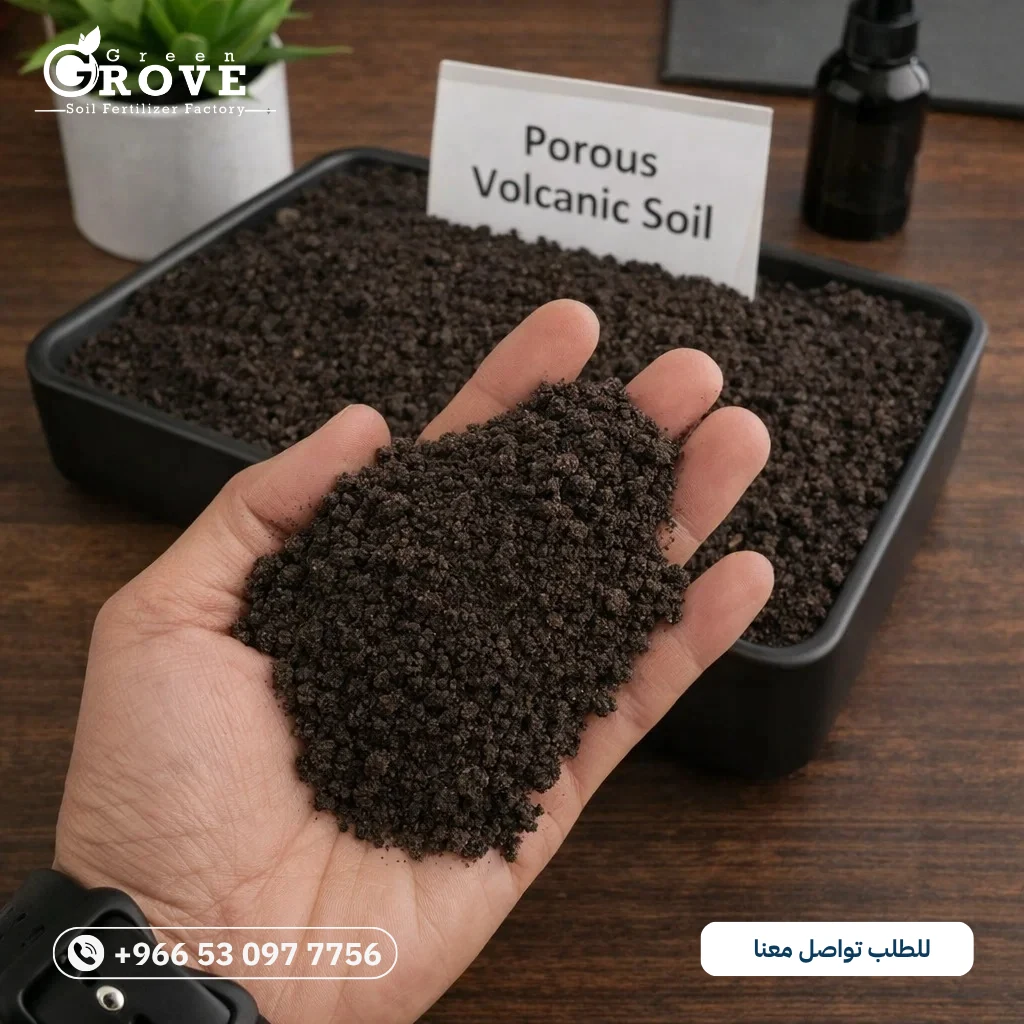
Green Grove Soil volcanic tuff 0–4 mm
Green Grove Soil Product

Natural agricultural volcanic rock for growing mixes and drainage

Choose the grade that fits your application. The delivery minimum is 50 bags, with quote requests available for larger quantities.

View SizesProduct Documents

Using Volcanic Stone in Existing Farms

It is not always practical to remix an established root zone, particularly around mature trees. Start with problem areas, loosen soil carefully without damaging major roots, and incorporate material through the relevant rooting zone where practical. If pooling is caused by a low site level or no drainage outlet, correct grade or drainage at the same time.

Preparing New Beds With a More Balanced Medium

New beds provide more control. Soil, volcanic stone, and other components can be blended before planting, then tested for infiltration and moisture retention. The target is even wetting without prolonged saturation, while retaining enough moisture between irrigations. Final ratios should reflect all components, not volcanic stone alone.

Irrigation Management After Improving Drainage

Once the soil structure changes, reassess irrigation instead of continuing the old schedule automatically. Water may enter faster and the drying pattern may change. Monitor moisture at more than one depth because the surface can dry while deeper soil remains wet. Adjust timing gradually according to the plant and measured root-zone conditions.

Drainage and Fertilization Are Connected

A continuously saturated root zone can reduce root function even when nutrients are available. At the opposite extreme, an excessively fast-draining medium can move dissolved nutrients beyond the active root zone. Changes to drainage should therefore be reviewed together with irrigation and fertigation practices.

Test a Small Area Before Scaling Up

A controlled field comparison reduces risk. Amend one representative section and keep a similar section as a reference. Record infiltration time, next-day moisture, root condition where inspection is possible, and plant response over an appropriate period. Adjust grade or quantity based on results rather than a generic percentage.

Common Mistakes When Correcting Poor Drainage

  • Assuming a coarse layer at the bottom of every planting hole automatically fixes drainage.
  • Improving the medium while continuing the same excessive irrigation volume.
  • Ignoring compaction caused by machinery or repeated foot traffic.
  • Using a large quantity without testing how the soil’s water behavior changes.
  • Ignoring ground level, slope, or general drainage infrastructure.

How Do You Evaluate Success?

Do not judge only by how fast surface water disappears. Look at infiltration, duration of saturation, moisture balance between irrigations, root distribution, and plant stability. Recheck the soil after several weeks to see whether the improved porosity remains or the soil is compacting again.

Use-Based Selection From Green Grove Soil

When discussing a project, define the problem clearly: water pooling around trees, a new bed mix, heavy clay, or another drainage issue. Also identify crop, irrigation method, rooting depth, and project volume. These details make particle-size and quantity selection more relevant to the actual application.

Conclusion: Treat the Cause Before the Symptom

Water pooling around roots can indicate an imbalance in how water and air move through soil. The solution begins with diagnosis, then combines root-zone structure improvement, irrigation adjustment, and any required grading or drainage work. Agricultural volcanic stone can be one practical structural component when it is selected and incorporated according to the soil and crop.

Product Documents

Clear technical data before ordering

Download the technical sheet, safety sheet, analysis, and product cards used as references across the content center.

Frequently Asked Questions

Is water pooling always caused by overwatering?

No. Excess irrigation can cause saturation, but dense soil, low porosity, site grading, or inadequate drainage can also keep water around roots.

How does volcanic stone support soil drainage?

Its granular, porous particles can add relatively stable pore spaces between finer soil particles, supporting movement of excess water and air when incorporated correctly.

Should I use the largest possible amount for better drainage?

No. Particle size and proportion should be selected according to soil, crop, rooting depth, and irrigation. Too much or the wrong grade can make water behavior unsuitable.

Should irrigation be changed after improving the soil?

Yes. Changes in structure can alter infiltration and drying, so irrigation timing and volume should be reassessed using actual root-zone moisture.

Green Grove Soil

Need Help Choosing the Right Grade?

Our team can help you select the appropriate particle size and quantity based on the plant, irrigation method and intended application.