Green Grove Soil Factory logo
Green Grove Soil Factory
"Together, let’s make it greener"
AR

Irrigation Water Waste and Dry Root Zones: How Volcanic Stone Supports Moisture Balance

Improve irrigation efficiency by managing root-zone structure, moisture distribution, drainage, emitter wetting patterns, and volcanic-stone particle size without relying on a fixed water-saving claim.

Irrigation Water Waste and Dry Root Zones: How Volcanic Stone Supports Moisture Balance
Table of Contents

When the soil surface dries quickly, it is tempting to increase irrigation frequency. But irrigation efficiency depends not only on how much water is applied; it also depends on how the root-zone structure receives, distributes, retains, and drains that water. An unbalanced soil can lose water rapidly in one area while remaining excessively wet in another.

The Problem Is Not Only Irrigation Volume

A well-designed root zone should retain enough usable moisture for the crop, drain excess water, and keep air-filled pore spaces around roots. This balance becomes especially important during high temperatures and frequent irrigation. More water cannot compensate indefinitely for a physical soil problem.

Why Do We Need a Balance Between Water Retention and Drainage?

A medium that holds nearly all applied water can remain saturated and oxygen-limited, while a medium that drains extremely rapidly can leave roots dry between irrigations. The objective is not maximum retention or maximum drainage, but a root environment that provides moisture and oxygen together.

Volcanic Stone as Part of Moisture Management

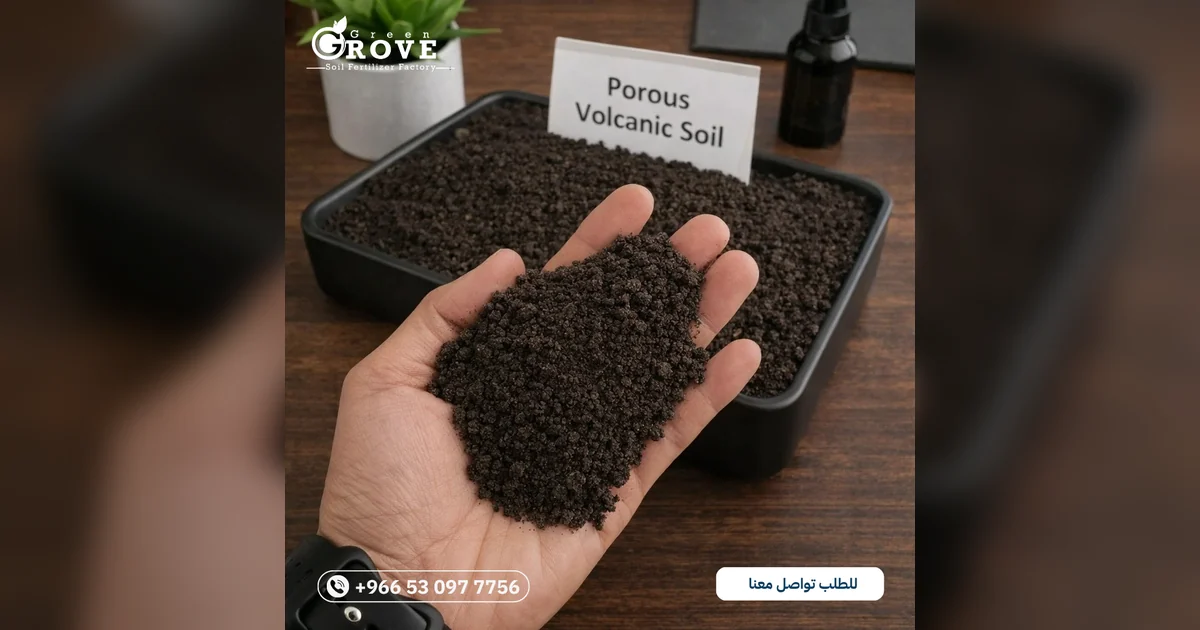
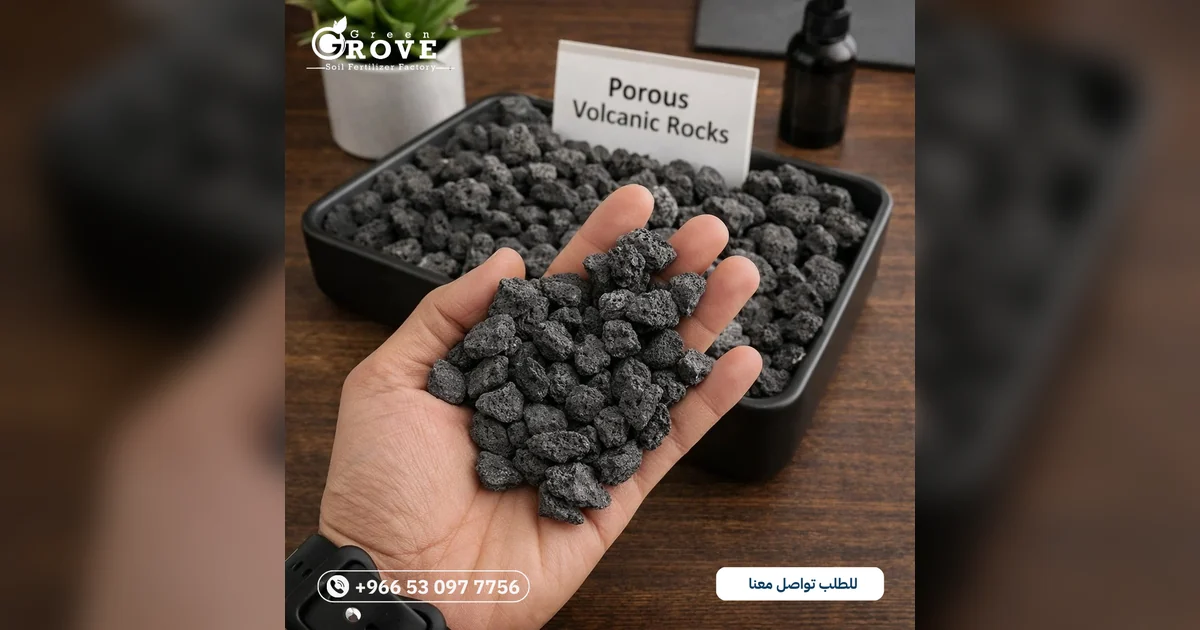
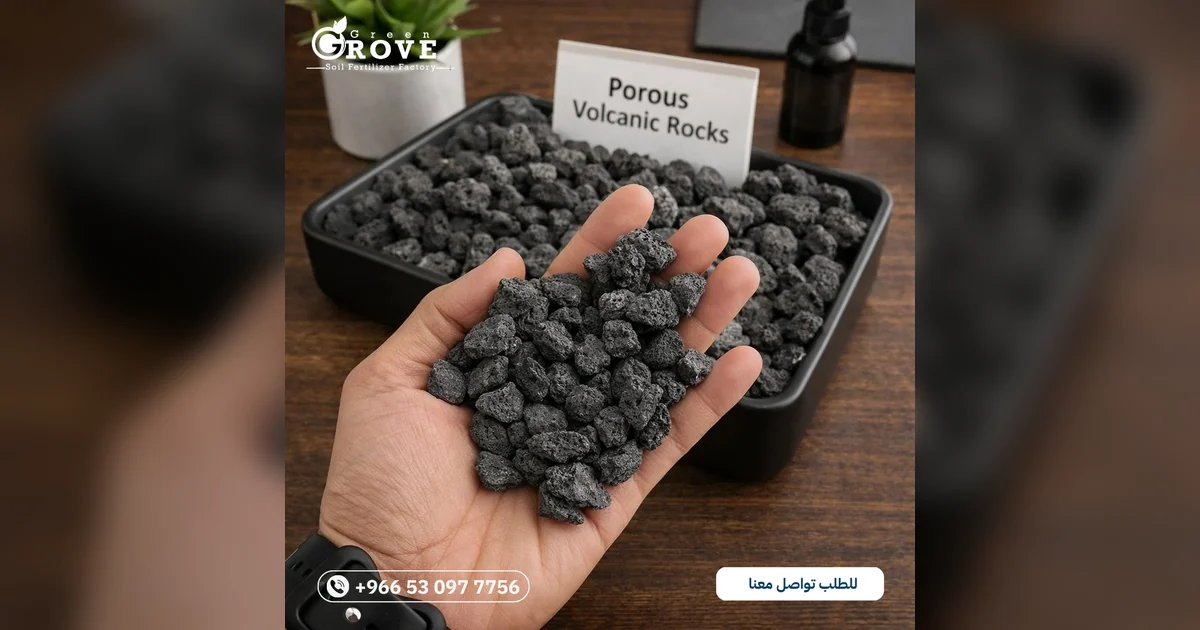
Porous agricultural volcanic stone can be used as one component of a designed growing medium. Its granular structure can support pore spaces and water movement while contributing to a more stable root-zone matrix. It does not replace the irrigation system; it changes the physical environment through which irrigation water moves.

Green Grove Soil Applications

Green Grove Soil supplies agricultural volcanic stone in particle sizes selected according to the application, including soil blends, planters, agricultural projects, and landscape uses. Grade and proportion should be chosen to balance the target requirements for aeration, drainage, and moisture behavior rather than applying one recipe everywhere.

Reducing Waste Starts in the Root Zone

When root-zone structure is improved, irrigation can be managed closer to actual crop demand instead of using extra water to compensate for uneven infiltration, compaction, or unstable moisture distribution. This does not establish a fixed water-saving percentage; actual efficiency depends on soil, crop, climate, system design, and management.

Irrigation Efficiency Starts in the Soil, Not Only at the Pump

Pumps, emitters, pressure, and operating time are important, but the soil determines whether delivered water remains in the useful rooting depth, runs across the surface, or moves below the roots. An efficient irrigation network can still perform poorly if the root zone cannot distribute water effectively.

Different Forms of Irrigation Water Waste

  • Surface runoff: water moves away because infiltration is too slow.
  • Deep percolation: water moves below the useful rooting depth.
  • Evaporation: exposed surface moisture is lost to heat and wind.
  • Uneven wetting: some zones remain dry while others receive excessive water.
  • Compensatory irrigation: the system is run longer because one part of the root zone receives water poorly.

Uneven Moisture Inside the Root Zone

Average soil moisture can look acceptable while distribution is highly uneven. Dense soil, textural layers, or poorly spaced emitters can create wet pockets beside dry zones. Roots then exploit only the favorable portion of the medium. A better physical structure can support more uniform movement, but emitter placement and hydraulic design still need to be correct.

What Is the Relationship Between Volcanic Stone and Moisture?

Volcanic stone has a porous, irregular surface. Within an appropriate blend, its particles can help preserve connected spaces for water and air and can contribute to more balanced moisture distribution. Its value is not that it holds the maximum possible amount of water; it is that it can support a root-zone structure where moisture retention and drainage are both managed.

Heavy and Sandy Soils Need Different Strategies

In heavy soil, the main challenge may be slow drainage and compaction, so a structural mineral component can help increase porosity. In very light sandy soil, the main challenge may be rapid moisture loss; the objective should not be to make drainage even faster. In that case volcanic stone, if used, belongs in a blend that also contains components selected for moisture retention. This is why one mixing percentage cannot suit all soils.

Drip Irrigation: Watch the Wetting Pattern, Not Only Runtime

Every dripper creates a wetting zone whose shape changes with soil texture. Water can spread more laterally in fine soil and move downward more quickly in lighter soil. After changing root-zone structure, inspect the width and depth of wetting. If water moves below the roots, runtime may be excessive; if the wetting zone is too narrow, emitter spacing or discharge may need review.

Number of Irrigations vs. Water per Irrigation

More frequent short irrigations are not always better, and longer irrigations are not automatically more efficient. The decision depends on rooting depth, soil water-holding behavior, and drainage. Adjust frequency and duration gradually based on measured or observed root-zone moisture instead of a fixed schedule.
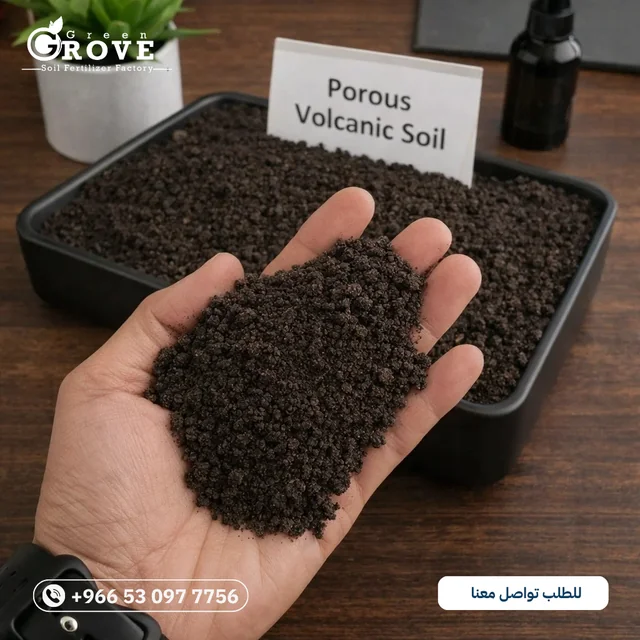
Green Grove Soil volcanic tuff 0–4 mm
Green Grove Soil Product

Natural agricultural volcanic rock for growing mixes and drainage

Choose the grade that fits your application. The delivery minimum is 50 bags, with quote requests available for larger quantities.

View SizesProduct Documents

Hot Weather Makes Root-Zone Management More Important

High temperatures increase crop water demand and evaporation. A grower may respond by irrigating more often, but a poorly drained soil can then become repeatedly saturated. A very light medium can move to the opposite extreme and dry too quickly. Root-zone structure makes moisture behavior more predictable, but monitoring remains essential because plant demand changes with canopy size, wind, humidity, and growth stage.

Surface Mulch and Evaporation

Appropriate surface cover can reduce direct exposure to sun and wind and may lower evaporation. It does not replace improvement of the root zone below. Volcanic stone can be used in some top-dressing or landscape contexts, but in this irrigation-efficiency discussion its main importance is the structure of the active rooting depth.

Fertigation Requires Good Water Distribution

When nutrients are delivered through irrigation, uneven water movement also means uneven nutrient distribution. Water that bypasses part of the root system or moves below the useful depth can reduce fertilizer-use efficiency. Structural improvement may help moisture spread more consistently, while nutrient concentration and timing still need to follow crop recommendations and analysis.

How to Monitor Soil Moisture Practically

Simple monitoring can start by checking soil by hand at more than one depth before and after irrigation. Larger projects can use moisture sensors or other measurement tools. Do not base decisions on the surface alone because it responds to heat and wind much faster than deeper soil. Keep records of irrigation time, duration, and moisture observations so before-and-after changes can be compared.

Test a Small Section Before Changing the Whole Farm

For a proposed growing-medium or soil amendment, test a representative section first. Apply a defined volcanic-stone grade and proportion, then compare infiltration speed, moisture persistence, plant condition, and the irrigation time needed to reach the same useful wetting depth against a similar untreated area. Local data are more valuable than a universal recipe.

Common Water-Saving Mistakes

  • Reducing irrigation sharply immediately after changing the soil without measuring moisture or allowing roots to adapt.
  • Adding more volcanic stone to already very light soil under the assumption that more material automatically saves water.
  • Using a dry surface as the only trigger for a new irrigation.
  • Changing several system variables simultaneously and losing the ability to identify which change affected water behavior.
  • Claiming or targeting a fixed water-saving percentage without site-specific measurements.

Particle Size and Proportion Determine Water Behavior

Larger particles generally create larger structural spaces and support drainage and aeration, while smaller particles integrate more closely into the surrounding medium. Proportion should balance the soil’s need to retain usable moisture with its need to remove excess water. Before ordering, define soil type, crop, irrigation method, and the specific physical objective.

How Do You Know Irrigation Efficiency Has Improved?

No single indicator is enough. Look for reduced surface runoff, more uniform moisture between plants, a healthy root zone between irrigations, fewer emergency compensatory irrigations, and a more appropriate wetting depth. Where water volumes are recorded, compare similar periods while accounting for weather and crop growth.

The goal is not to promise one fixed percentage of savings. The goal is to make each irrigation closer to actual crop demand and reduce water that runs off, bypasses the roots, or is applied only to compensate for poor soil behavior.

Green Grove Soil Volcanic Stone as Part of Water Management

Green Grove Soil agricultural volcanic stone can be used in soil, growing-media, planter, and agricultural-project applications. Its role in irrigation management comes from supporting a more porous and balanced root-zone structure, not from replacing hydraulic design or moisture monitoring. The strongest approach combines suitable soil structure, correct irrigation-system operation, and continuous observation.

Conclusion: Save Water by Improving Where Roots Receive It

Irrigation waste can begin with soil that distributes water poorly. Improving efficiency therefore means more than reducing pump runtime. Build a root zone that accepts water, keeps a useful amount where roots can use it, and drains the excess. Agricultural volcanic stone can be part of that strategy when the source of the problem is diagnosed, particle size and proportion are selected appropriately, and irrigation is adjusted to actual moisture conditions.

Product Documents

Clear technical data before ordering

Download the technical sheet, safety sheet, analysis, and product cards used as references across the content center.

Frequently Asked Questions

Does volcanic stone guarantee a fixed percentage of water savings?

No. Water-use efficiency depends on soil, crop, climate, irrigation design, root depth, and management. The source article does not support one universal saving percentage.

How can soil structure waste irrigation water?

Poor structure can cause surface runoff, uneven wetting, prolonged saturation, or rapid movement below the root zone, forcing growers to irrigate more to compensate.

Is volcanic stone used the same way in heavy and sandy soil?

No. Heavy soils may need more structural porosity, while very light soils may need more moisture-retentive components. Grade and proportion should be selected for the existing texture.

What should I monitor after changing the root-zone mix?

Track moisture at multiple depths, wetting width and depth, runoff, duration of saturation, plant response, and irrigation time rather than relying on the surface alone.

Should I reduce irrigation immediately after adding volcanic stone?

Not automatically. Reassess water demand gradually using actual root-zone moisture because the new structure may change infiltration and drying behavior.

Green Grove Soil

Need Help Choosing the Right Grade?

Our team can help you select the appropriate particle size and quantity based on the plant, irrigation method and intended application.