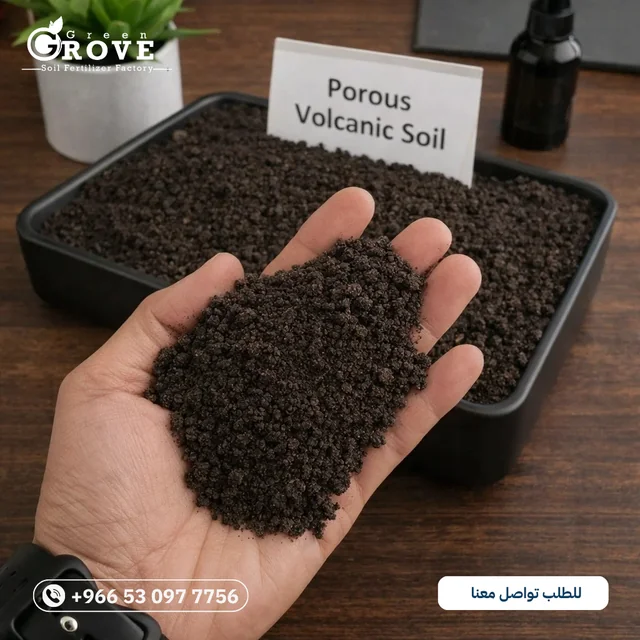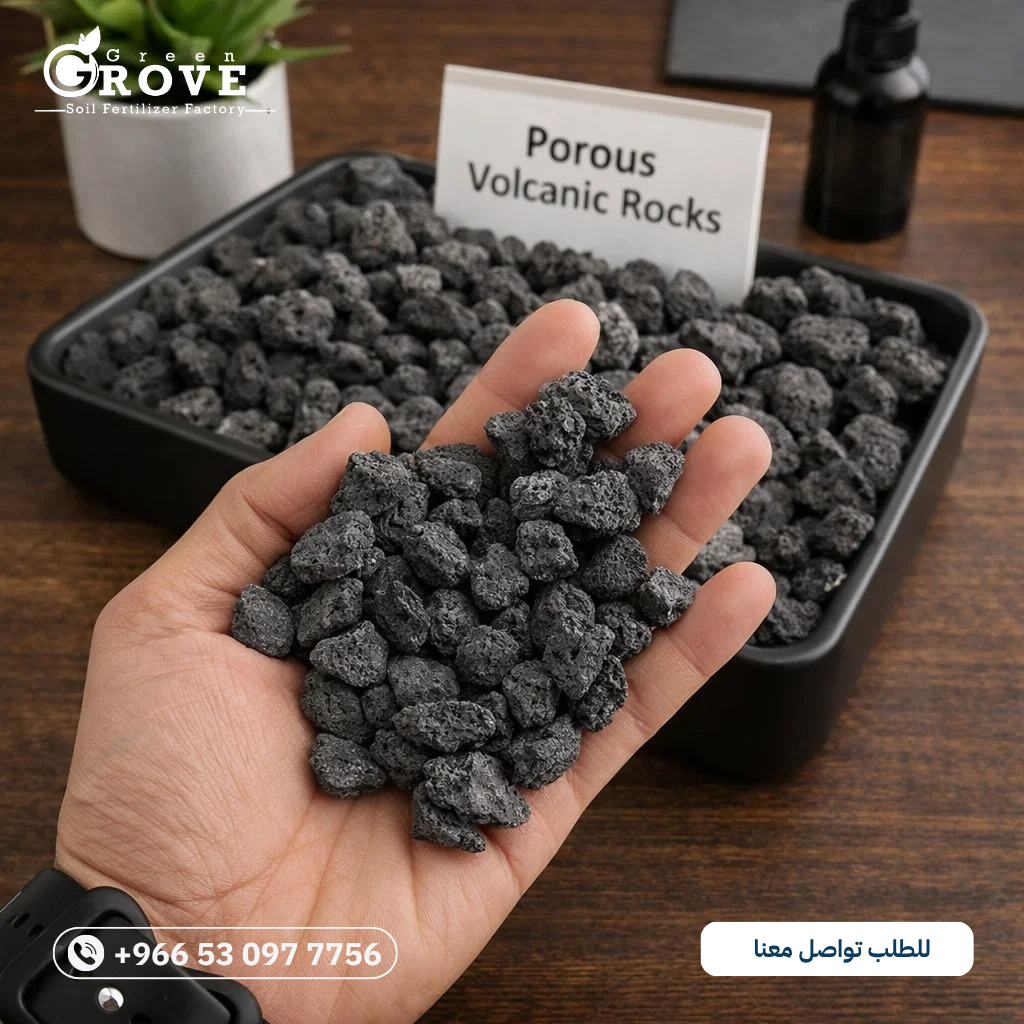
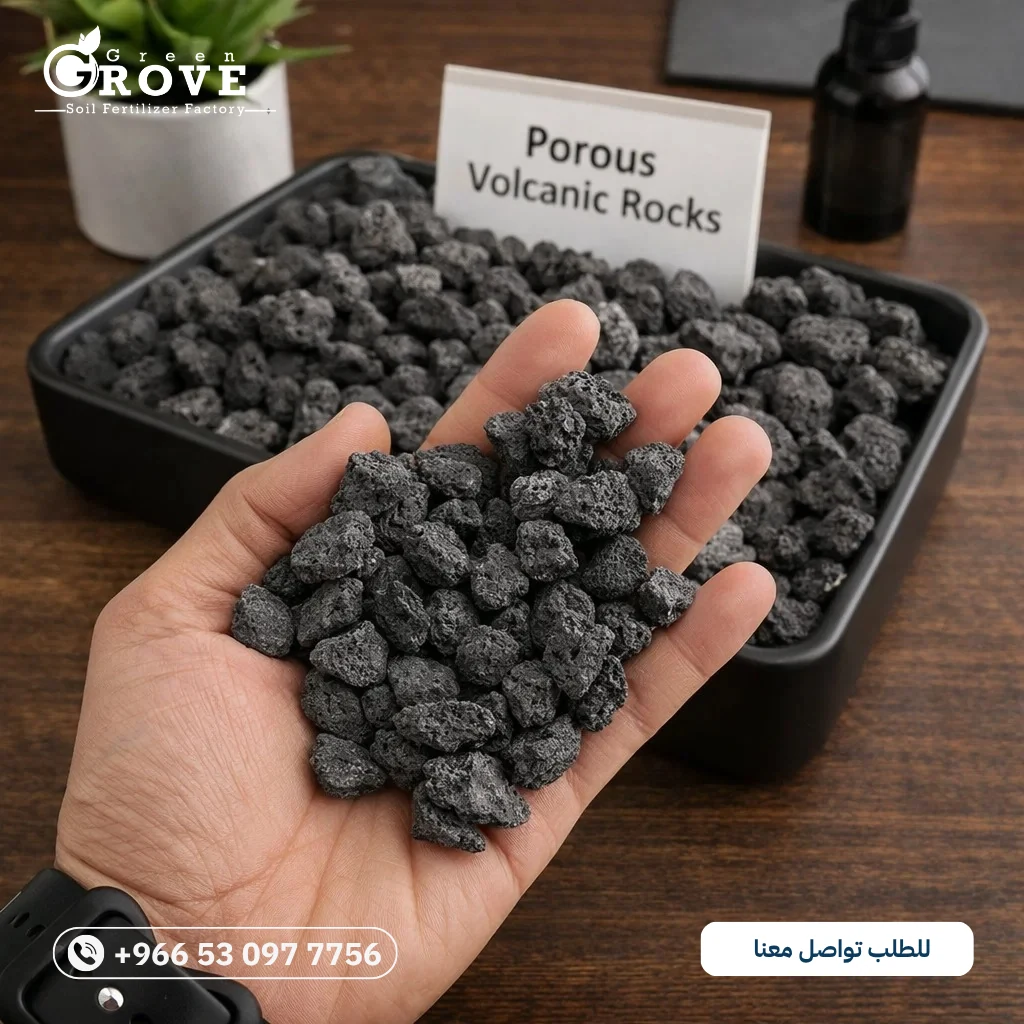
This is a cornerstone guide to agricultural volcanic stone on the Green Grove Soil website. It brings together the main information a grower, nursery operator, or buyer needs before ordering: what the material is, its applications, particle sizes, mixing approach, differences between use cases, and the purchasing process.
Agricultural volcanic stone is a naturally porous mineral material used within soil and growing-media blends or as a supporting medium in selected granular systems. Its main value is improving the physical properties of the root zone—not replacing fertilizer or correcting irrigation problems by itself.
What Is Agricultural Volcanic Stone?
Agricultural volcanic stone consists of porous mineral particles, typically gray to black, used to improve soil or growing-media structure. Pores and spaces between particles can support aeration and the drainage of excess water, creating a more balanced physical environment around roots.
Topics Covered by This Guide
- Agricultural volcanic stone
- Volcanic stone for plants
- Volcanic stone for agriculture
- Volcanic tuff
- Volcanic soil
- Volcanic stone for sale
- Agricultural volcanic stone for sale
- Volcanic stone in Saudi Arabia
- Volcanic stone for nurseries
- Volcanic stone for hydroponics
- 0–4 mm volcanic stone
- 10–25 mm volcanic stone
Particle-Size Selection Guide
| Grade | Typical Best Fit | Important Note |
|---|---|---|
| 0–4 mm | Soil blends, peat, coco, nurseries, and pots | Integrates into the mix and can support structure, aeration, and balanced drainage. |
| 10–25 mm | High aeration, drainage, aquaponics, selected hydroponics, and surface dressing | Wash thoroughly before hydroponic or aquaponic use to reduce fines and dust. |
Main Agricultural Applications
- Soil improvement: incorporate into the root zone where the objective is to reduce compaction and support aeration.
- Pots and nurseries: use within growing-media blends to improve texture and the water-air balance.
- Cacti and succulents: can support faster drainage when the proportion is matched to the plant and climate.
- Hydroponics: coarse material can be used in selected granular systems after washing.
- Aquaponics: coarse media may support roots and provide granular surface area when the system is properly managed.