شعار مصنع قرين قروف سويل للأسمدة
مصنع قرين قروف سويل
"معاً، لنجعلها خضراء"
EN

How to Calculate Agricultural Volcanic Tuff Quantity in Cubic Metres

Formulas and examples for calculating volcanic tuff quantities for beds, containers and growing mixes.

How to Calculate Agricultural Volcanic Tuff Quantity in Cubic Metres
محتويات المقال
Short answer: Calculate the root-zone volume first: length × width × depth in metres. Multiply that volume by the volcanic component percentage. For pots, multiply container count by capacity in litres and divide by 1,000. Then add a documented operating allowance and confirm grade, packaging and delivery conditions.

Why growing-media ratios are calculated by volume

A volcanic component is used to change pore distribution, water movement and air space within the root-zone volume. Blend ratios should therefore be calculated by volume. Weight becomes relevant for logistics only after the bulk density of the actual grade and batch is known. A generic cubic-metre-to-tonne conversion can be inaccurate because particle size, moisture, grading and packing method affect bulk density.

Core formulas

Project typeFormulaResult
Rectangular bedLength m × width m × depth mm³ of root-zone profile
Open areaArea m² × treatment depth mm³ of amended profile
Circular container3.1416 × radius² × heightm³ when dimensions are metres
Rated pot capacityPot count × litres per pot ÷ 1,000m³ of total mix
Component volumeTotal mix m³ × percentage ÷ 100m³ of component

Example 1: rectangular growing bed

A bed is 12 m long, 1.5 m wide and 0.35 m deep. Total volume = 12 × 1.5 × 0.35 = 6.30 m³. If the approved mix contains 30% volcanic tuff, required tuff = 6.30 × 0.30 = 1.89 m³. The remaining 4.41 m³ is allocated to other components.

Example 2: landscape area

An 800 m² area will be amended to a depth of 15 cm. Convert depth to metres: 0.15 m. Profile volume = 800 × 0.15 = 120 m³. At a 25% volcanic component, requirement = 30 m³. This is a component within the amended profile, not a replacement of all existing soil.

Example 3: pots and planters

For 250 pots rated at 30 litres, total mix = 7,500 litres = 7.5 m³. A 20% inclusion rate for 4–8 mm material requires 1.5 m³. Verify actual fill volume because containers are not always filled to their nominal rim capacity.

Example 4: top dressing

A 100 m² bed with a 5 cm surface layer requires 100 × 0.05 = 5 m³. This is a separate top-dressing calculation, not a root-zone blend ratio. Subtract uncovered areas before ordering.

Operating allowance

The allowance should reflect survey accuracy, depth variation, handling loss, blending and leveling. Keep four figures separate: net design volume, component percentage, documented allowance and final commercial quantity. This prevents duplicated allowances and makes the quotation auditable.
قرين قروف سويل 0–4 مم
منتج قرين قروف سويل

حجر بركاني زراعي طبيعي للخلطات والتصريف

اختر المقاس المناسب، أقل كمية للتوصيل 50 كيس، ويمكنك طلب المنتج أو طلب عرض سعر للكميات الكبيرة مباشرة.

عرض المقاساتتحميل ملفات المنتج

Select the grade before finalizing quantity

GradeGeneral functionTypical applications
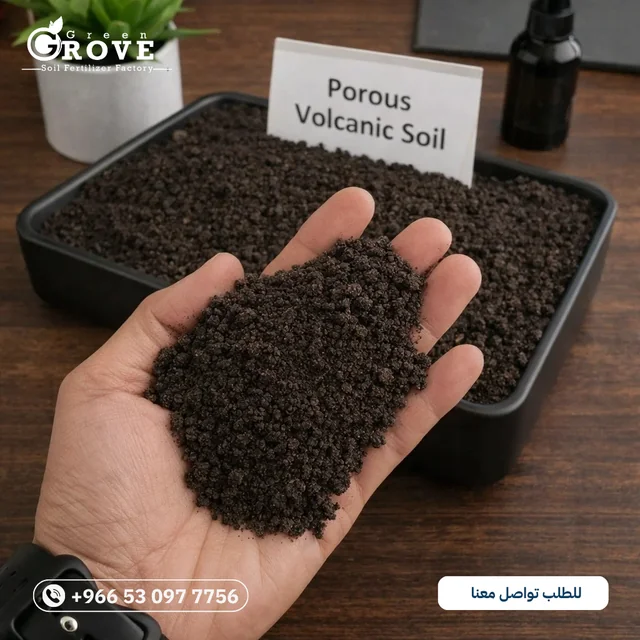
0–4 mmMedium building, stability and relatively greater moisture moderationGrowing mixes, grow bags and root-zone improvement
4–8 mmBalanced aeration, drainage and moderate moisture retentionPots, planters and balanced blends
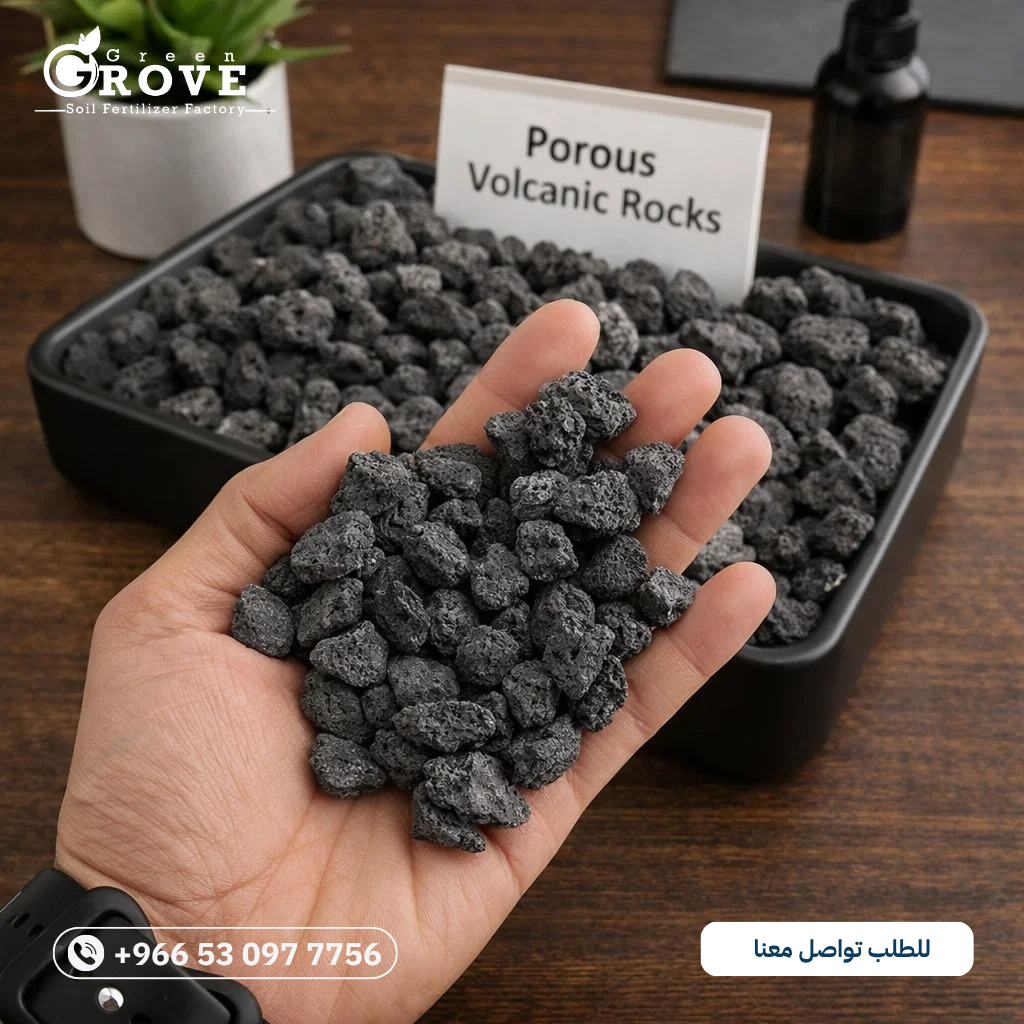
10–25 mmHigher air space, faster drainage and particle stabilityTop dressing, granular systems and coarse blends

These are functional directions, not universal recipes. Crop, container depth, irrigation and water quality remain decisive.

Convert cubic metres to bags

Bag count = required volume ÷ net volume per bag. A preliminary plan for 22 m³ using nominal 1 m³ bulk bags is 22 bags. Final confirmation must follow the quoted net fill and packaging tolerance. Small bags may be sold by litres or weight and should not be converted without product data.

Quotation checklist

  1. Application: blend, soil amendment, pot, granular medium or top dressing.
  2. Crop or plant group.
  3. Dimensions, area and actual depth.
  4. Approved volume-based blend ratio.
  5. Required grade: 0–4, 4–8 or 10–25 mm.
  6. Net quantity and documented allowance.
  7. Packaging, destination and unloading conditions.
  8. Delivery schedule and phased quantities.

Common calculation mistakes

  • Entering centimetres in a formula that expects metres.
  • Applying a mix percentage to area rather than volume.
  • Using component percentages that total more than 100%.
  • Treating top dressing as part of the root-zone blend.
  • Converting volume to mass with another grade’s density.
  • Adding the same allowance twice.

Frequently asked questions

How many litres are in one cubic metre?

One cubic metre equals 1,000 litres.

Should volcanic tuff be specified by weight?

Growing-medium ratios are normally designed by volume. Weight is used later for shipping based on verified bulk density.

How many cubic metres fit on a trailer?

It depends on packaging and legal payload. A common Green Grove Soil commercial plan is 22 nominal 1 m³ bulk bags, subject to final quotation and transport confirmation.

Does a calculator replace a site survey?

No. It provides an engineering estimate from entered dimensions; irregular or sensitive projects still require verified measurements and agronomic review.

Conclusion

Calculate net root-zone volume, apply the component percentage, add a justified allowance and confirm grade and packaging. This produces a transparent quotation and reduces shortage or surplus. The Green Grove Soil calculator can provide the initial estimate before commercial review.

ملفات المنتج

بيانات فنية واضحة قبل الطلب

يمكن للعميل تحميل البطاقة الفنية ونشرة السلامة والتحليل وبطاقات المقاسات، حتى تكون المقالات والطلب مبنيين على بيانات المنتج الفعلية.

قرين قروف سويل

هل تحتاج مساعدة في اختيار المقاس المناسب؟

يمكن لفريق قرين قروف سويل مساعدتك في اختيار المقاس والكمية المناسبة حسب نوع النبات وطريقة الري والاستخدام.